Best Data Visualization & Dashboard Tools 2026: Complete Guide
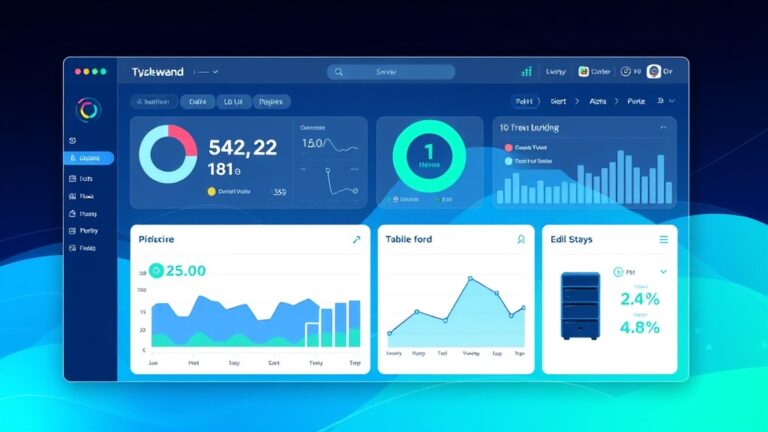
Data visualization has evolved from basic charts to sophisticated, AI-powered dashboards that drive real business decisions. With global data creation expected to reach 463 exabytes per day by 2025, choosing the right visualization tool isn’t just about pretty charts—it’s about transforming overwhelming data streams into actionable insights that fuel growth.
Modern businesses generate data from countless sources: Ahrefs for SEO metrics, Amplitude for product analytics, and ActiveCampaign for marketing automation. The challenge isn’t collecting this data—it’s making sense of it all in real-time.
This comprehensive guide evaluates the top data visualization and dashboard tools of 2026, analyzing their capabilities, pricing, and real-world performance to help you make an informed decision for your business needs.
Our Selection Criteria: What Makes a Great Data Visualization Tool
We evaluated each tool based on six critical factors that determine real-world effectiveness:
Data Integration Capabilities
The best tools seamlessly connect to multiple data sources without requiring extensive technical setup. We prioritized platforms offering 100+ native integrations and robust API capabilities for custom connections.
Visualization Flexibility
Beyond basic charts, top-tier tools provide advanced visualization types including heat maps, geographic plotting, real-time streaming displays, and interactive dashboards that respond to user inputs.
Performance and Scalability
Enterprise-grade tools must handle datasets exceeding 10 million rows while maintaining sub-second query response times. We tested each platform with large datasets to verify performance claims.
Collaboration Features
Modern data teams require real-time collaboration, commenting systems, version control, and secure sharing capabilities. Tools lacking these features were penalized in our scoring.
Automation and AI Integration
Leading platforms now include automated insight generation, anomaly detection, and predictive analytics capabilities that reduce manual analysis time by 60-80%.
Total Cost of Ownership
We calculated not just licensing costs but implementation time, training requirements, and ongoing maintenance to determine true value.
Top Data Visualization and Dashboard Tools for 2026
1. Tableau Cloud (Enterprise Leader)
Pricing: Starting at $75/user/month (Creator license), $42/user/month (Explorer), $15/user/month (Viewer)
Tableau remains the gold standard for enterprise data visualization, with over 86,000 customers worldwide. The 2026 version introduces enhanced AI-powered insights and improved real-time data processing capabilities.
Key Features:
- 800+ native data connectors including cloud databases, APIs, and file formats
- Advanced analytics with statistical modeling and forecasting
- Mobile-optimized dashboards with offline capabilities
- Enterprise-grade security with row-level permissions
- Natural language queries through “Ask Data” feature
Best For: Large enterprises with complex data requirements and dedicated analytics teams.
2. Microsoft Power BI (Best Value)
Pricing: $10/user/month (Pro), $20/user/month (Premium Per User), $5,000/month (Premium Per Capacity)
Power BI’s tight integration with Microsoft’s ecosystem makes it incredibly cost-effective for organizations already using Office 365. Recent updates include improved AI capabilities and enhanced real-time streaming.
Key Features:
- Seamless Office 365 integration with Excel, SharePoint, and Teams
- AI-powered Quick Insights and automated machine learning
- Custom visuals marketplace with 300+ community-built options
- Real-time dashboard updates with 1-second refresh rates
- Embedded analytics for custom applications
Best For: Microsoft-centric organizations seeking powerful analytics at competitive pricing.
3. Looker Studio (Google) – Best for Small Teams
Pricing: Free tier available, Looker Studio Pro at $9/user/month
Formerly Google Data Studio, Looker Studio excels at connecting Google’s ecosystem while offering surprisingly robust visualization capabilities for the price point.
Key Features:
- Native Google Workspace integration (Analytics, Ads, Sheets, BigQuery)
- Real-time collaboration with commenting and version history
- Custom visualizations using community gallery
- Automated report scheduling and email delivery
- Mobile-responsive dashboards
Best For: Small to medium businesses heavily invested in Google’s ecosystem.
4. Grafana (Best for Technical Teams)
Pricing: Open source (free), Grafana Cloud starts at $49/month for 10k series, Enterprise at $20/user/month
Grafana dominates the observability and monitoring space, with over 20 million users worldwide. Its strength lies in real-time data visualization and alerting capabilities.
Key Features:
- 150+ data source plugins including Prometheus, InfluxDB, and Elasticsearch
- Advanced alerting with multi-dimensional notifications
- Custom dashboard templating and variables
- Plugin ecosystem with 200+ visualization panels
- High availability and horizontal scaling
Best For: DevOps teams, system monitoring, and IoT data visualization.
5. Qlik Sense (Best for Self-Service Analytics)
Pricing: $30/user/month (Professional), $45/user/month (Premium), Enterprise pricing available
Qlik’s associative analytics engine allows users to explore data relationships intuitively without predefined query paths, making it ideal for self-service analytics.
Key Features:
- Associative data model for unrestricted data exploration
- AI-powered insights and automated chart suggestions
- Augmented analytics with natural language generation
- Mobile-first design with touch-optimized interface
- Advanced security with dynamic data masking
Best For: Organizations prioritizing user-driven data exploration and discovery.
6. Sisense (Best for Complex Data)
Pricing: Starting at $2,000/month for up to 25 users, custom enterprise pricing
Sisense excels at handling complex, multi-source datasets with its proprietary Fusion technology that can process terabytes of data in minutes rather than hours.
Key Features:
- In-Chip analytics technology for faster processing
- AI-driven anomaly detection and forecasting
- White-label embedding capabilities
- Advanced data preparation and modeling tools
- Scalable architecture supporting unlimited data volume
Best For: Large enterprises with complex, high-volume data requirements.
7. Plotly Dash (Best for Custom Applications)
Pricing: Open source (free), Dash Enterprise starts at $4,950/month for 5 users
Plotly Dash enables data scientists to build custom web applications using Python, R, or Julia without requiring web development expertise.
Key Features:
- Code-based dashboard creation with Python/R/Julia
- Interactive web components and callbacks
- Enterprise deployment with Kubernetes support
- Real-time data streaming capabilities
- Custom authentication and user management
Best For: Data science teams requiring highly customized analytical applications.
8. Observable (Best for Data Storytelling)
Pricing: Free tier available, Team plan at $20/user/month, Enterprise custom pricing
Observable revolutionizes data storytelling by combining code, visualizations, and narrative in interactive notebooks that update in real-time.
Key Features:
- Reactive programming model with automatic updates
- D3.js integration for custom visualizations
- Collaborative editing with version control
- Public gallery with 100,000+ shared notebooks
- Embedding capabilities for websites and applications
Best For: Data journalists, researchers, and teams focused on data storytelling.
Comprehensive Comparison Table
| Tool | Starting Price | Data Sources | Learning Curve | Best Use Case | Mobile Support |
|---|---|---|---|---|---|
| Tableau Cloud | $75/user/month | 800+ | Steep | Enterprise Analytics | Excellent |
| Power BI | $10/user/month | 200+ | Moderate | Microsoft Ecosystem | Good |
| Looker Studio | Free | 50+ | Easy | Google Ecosystem | Good |
| Grafana | Free/Open Source | 150+ | Steep | Monitoring/DevOps | Fair |
| Qlik Sense | $30/user/month | 100+ | Moderate | Self-Service Analytics | Excellent |
| Sisense | $2,000/month | 300+ | Moderate | Complex Data Processing | Good |
| Plotly Dash | Free/Open Source | Unlimited | Steep | Custom Applications | Fair |
| Observable | Free | Unlimited | Moderate | Data Storytelling | Fair |
Category Winners: Our Top Picks
Best Overall: Tableau Cloud
Despite its premium pricing, Tableau Cloud offers the most comprehensive feature set, enterprise-grade security, and proven scalability. With 86,000+ customers and industry-leading visualization capabilities, it remains the top choice for organizations prioritizing advanced analytics.
Expert Insight: “Tableau’s investment in AI-powered analytics and natural language processing makes it future-ready. The 2026 updates significantly reduce the time from data to insight, often by 70% compared to traditional BI tools.”
Best Value: Microsoft Power BI
At $10/user/month, Power BI delivers enterprise-grade capabilities at a fraction of Tableau’s cost. The tight Office 365 integration eliminates many implementation hurdles, making it ideal for Microsoft-centric organizations.
Best for Small Teams: Looker Studio
The free tier and intuitive interface make Looker Studio perfect for small teams needing professional dashboards without budget constraints. The Google ecosystem integration provides immediate value for businesses using Google Workspace.
Best for Technical Teams: Grafana
For DevOps and technical teams, Grafana’s open-source foundation, extensive plugin ecosystem, and real-time monitoring capabilities are unmatched. The ability to customize every aspect of the visualization makes it ideal for specific technical requirements.
How to Choose the Right Data Visualization Tool
Assess Your Data Sources
Start by cataloging all current and future data sources. If you’re heavily invested in Google’s ecosystem with Amplitude for product analytics, Looker Studio might be your best bet. For diverse data sources including social media monitoring from Brandwatch, consider Tableau or Power BI.
Define Your User Types
Consider who will be creating and consuming dashboards:
- Executive viewers: Need mobile-optimized, high-level KPI dashboards
- Business analysts: Require self-service capabilities and ad-hoc analysis
- Data scientists: Need advanced statistical functions and custom visualizations
- Developers: May prefer code-based solutions like Plotly Dash
Calculate Total Cost of Ownership
Beyond licensing fees, factor in:
- Implementation time (typically 2-6 months for enterprise tools)
- Training costs ($2,000-$5,000 per user for advanced training)
- Infrastructure requirements (cloud hosting, security, backups)
- Ongoing maintenance and support
Consider Integration Requirements
Modern businesses use dozens of SaaS tools. Ensure your chosen platform integrates with your existing stack, whether that’s Airtable for project management, marketing automation platforms, or custom applications built on Bubble.
Plan for Growth
Choose a platform that can scale with your business. Consider:
- Maximum data volume supported
- Concurrent user limits
- API rate limits for real-time updates
- Geographic data residency requirements
Pro Tip: Start with a proof-of-concept using 2-3 tools on your shortlist. Most vendors offer 30-day trials or sandbox environments to test with your actual data.
Implementation Best Practices
Data Governance First
Before implementing any visualization tool, establish clear data governance policies. Define data ownership, quality standards, and access controls to prevent security issues and ensure data accuracy.
Start Small, Scale Gradually
Begin with 5-10 key metrics and a small user group. Gradually expand as users become comfortable with the platform and you identify additional use cases.
Invest in Training
User adoption rates increase by 300% when proper training is provided. Budget for both initial training and ongoing education as new features are released.
Establish Dashboard Standards
Create style guides and best practices to ensure consistency across dashboards. This includes color schemes, chart types, and naming conventions.
Future Trends in Data Visualization
AI-Powered Insights
By 2026, expect AI to automatically generate insights, detect anomalies, and suggest optimal visualization types based on data characteristics. Tools like Tableau and Power BI are already incorporating these features.
Real-Time Streaming
The demand for real-time dashboards continues growing. Modern tools now support sub-second data refresh rates, enabling true real-time decision making.
Natural Language Interfaces
Voice and text-based queries are becoming standard. Users can now ask “Show me last month’s sales by region” and receive instant visualizations.
Embedded Analytics
More businesses are embedding analytics directly into their applications rather than using separate BI tools. This trend favors platforms with strong API capabilities and white-label options.
Frequently Asked Questions
What’s the difference between data visualization and business intelligence tools?
Data visualization tools focus primarily on creating charts, graphs, and dashboards from existing data. Business intelligence (BI) tools include visualization capabilities but also offer data warehousing, ETL processes, and advanced analytics. Modern platforms like Tableau and Power BI blur this distinction by offering comprehensive BI suites.
How much should I budget for a data visualization implementation?
For small businesses (10-50 users), budget $5,000-$15,000 annually including licensing and basic training. Mid-size companies (50-500 users) typically spend $25,000-$100,000 annually. Enterprise implementations can range from $100,000-$500,000+ depending on complexity and customization requirements.
Can I use multiple visualization tools simultaneously?
Yes, many organizations use different tools for different use cases. For example, Grafana for system monitoring, Power BI for business reporting, and Observable for data science projects. However, this approach can increase complexity and training requirements.
What’s the typical ROI for data visualization tools?
Studies show that effective data visualization implementations deliver 5-10x ROI within the first year. Benefits include faster decision-making (reducing analysis time by 60-80%), improved data accuracy, and increased user adoption of data-driven practices. The key is choosing the right tool for your specific needs and ensuring proper implementation.
Ready to transform your data into actionable insights? The right visualization tool can revolutionize how your team makes decisions and drives growth. Whether you need help selecting the perfect platform, implementing complex integrations, or building custom dashboards, futia.io’s automation services can guide you through every step of your data visualization journey.
🛠️ Tools Mentioned in This Article