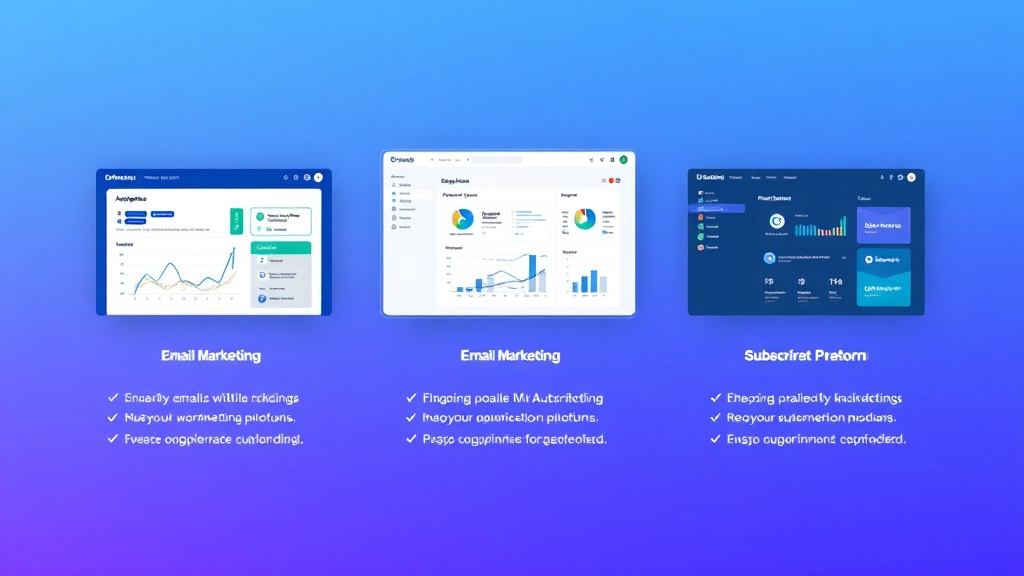
Mailchimp vs ConvertKit vs Beehiiv: Complete Email Platform Comparison 2024
Choosing the right email marketing platform can make or break your automated business growth strategy. With email marketing delivering an average ROI of $42 for every $1 spent, selecting between Mailchimp, ConvertKit, and Beehiiv isn’t just a technical decision—it’s a business-critical one that impacts your revenue potential and operational efficiency.
Each platform serves distinct market segments: Mailchimp dominates the small business space with 13 million users, ConvertKit focuses on creators with advanced automation, and Beehiiv emerges as the newsletter-first platform gaining traction among content creators. This comprehensive analysis will help you determine which platform aligns with your specific automation needs and business model.
Quick Comparison Overview
| Feature | Mailchimp | ConvertKit | Beehiiv |
|---|---|---|---|
| Best For | Small businesses, e-commerce | Creators, course sellers | Newsletter publishers |
| Starting Price | Free (up to 500 contacts) | $9/month (300 subscribers) | Free (up to 2,500 subscribers) |
| Automation Complexity | Medium | Advanced | Basic |
| Design Templates | 200+ | 100+ | 50+ |
| Analytics Depth | Comprehensive | Creator-focused | Newsletter-focused |
| Integration Count | 300+ | 100+ | 50+ |
| Learning Curve | Easy | Medium | Easy |
| Overall Rating | 4.2/5 | 4.4/5 | 4.1/5 |
Mailchimp: The All-in-One Marketing Powerhouse
Core Strengths and Features
Mailchimp has evolved from a simple email tool into a comprehensive marketing automation platform. With over 13 million users worldwide, it offers the most extensive feature set among the three platforms. The platform excels in providing omnichannel marketing capabilities, combining email, social media, landing pages, and e-commerce tools under one roof.
The automation builder uses a visual drag-and-drop interface that makes complex workflows accessible to non-technical users. You can create sophisticated customer journeys based on purchase behavior, website activity, and engagement patterns. The platform’s machine learning capabilities automatically optimize send times and subject lines, potentially increasing open rates by up to 15%.
Mailchimp’s integration ecosystem is unmatched, with over 300 native integrations including popular tools like Shopify, WordPress, and Salesforce. This extensive connectivity makes it particularly valuable for businesses using multiple tools in their tech stack, similar to how Airtable serves as a central hub for data management across various platforms.
Pricing Structure Analysis
Mailchimp operates on a freemium model with four distinct tiers:
- Free Plan: Up to 500 contacts, 1,000 emails/month, basic templates
- Essentials ($13/month): Up to 500 contacts, removes Mailchimp branding, basic automation
- Standard ($20/month): Advanced automation, retargeting ads, A/B testing
- Premium ($350/month): Advanced segmentation, multivariate testing, phone support
The pricing scales significantly with subscriber count, making it expensive for large lists. A 10,000-subscriber account costs $99/month on the Standard plan, which can strain budgets for content creators or small businesses.
Automation Capabilities
Mailchimp’s automation features shine in e-commerce scenarios. The platform offers pre-built workflows for abandoned cart recovery, welcome series, and post-purchase follow-ups. The Customer Journey Builder allows for complex branching logic based on customer behavior, demographic data, and purchase history.
Advanced features include predictive analytics that identify customers likely to make repeat purchases, and product recommendation engines that dynamically insert relevant items into emails. These AI-powered features can increase revenue per email by 20-30% for e-commerce businesses.
ConvertKit: The Creator Economy Champion
Creator-Focused Design Philosophy
ConvertKit positions itself as the email marketing platform built specifically for creators, bloggers, and online course sellers. With over 600,000 creators using the platform, it focuses on simplicity without sacrificing power. The interface prioritizes subscriber management and automation over design complexity, making it ideal for content creators who need robust functionality without technical overhead.
The platform’s tagging and segmentation system is particularly sophisticated, allowing creators to organize subscribers based on interests, purchase behavior, and engagement levels. This granular control enables highly targeted campaigns that can achieve open rates 25-40% higher than broadcast emails.
Advanced Automation Features
ConvertKit’s automation capabilities are designed around the creator’s workflow. The Visual Automation Builder allows for complex sequences triggered by link clicks, tag additions, or form submissions. Popular automation templates include lead magnets, product launches, and evergreen sales funnels.
The platform excels in behavioral-based automation. You can create sequences that adapt based on subscriber actions—for example, moving engaged subscribers to a sales sequence while nurturing less active subscribers with valuable content. This intelligent routing can improve conversion rates by up to 50% compared to one-size-fits-all approaches.
Integration with creator tools is seamless, connecting naturally with platforms like Teachable, Gumroad, and Stripe. This ecosystem approach mirrors how ActiveCampaign serves businesses with complex automation needs across multiple touchpoints.
Pricing and Value Proposition
ConvertKit uses subscriber-based pricing across three tiers:
- Creator ($9/month): Up to 300 subscribers, unlimited emails, basic automation
- Creator Pro ($25/month): Advanced automation, subscriber scoring, Facebook Custom Audiences
- Creator Pro (10K subscribers): $119/month with advanced reporting and priority support
While more expensive than Mailchimp’s free tier, ConvertKit provides better value for creators who need advanced automation without the complexity of enterprise-level platforms. The pricing remains competitive even at higher subscriber counts, making it sustainable for growing creator businesses.
Beehiiv: The Newsletter-First Disruptor
Modern Newsletter Publishing
Beehiiv emerged in 2021 as a newsletter-first platform, designed by the team behind Morning Brew. The platform focuses exclusively on newsletter publishing, offering modern features that traditional email platforms often lack. With rapid growth to over 100,000 creators, Beehiiv represents the new generation of email tools built for the creator economy.
The platform’s strength lies in its publishing workflow. The editor combines the simplicity of writing tools with the power of email marketing, allowing creators to focus on content creation rather than technical setup. Built-in monetization features include native advertising, paid subscriptions, and referral programs that can generate additional revenue streams.
Unique Monetization Features
Beehiiv’s monetization capabilities set it apart from traditional email platforms. The Ad Network allows publishers to earn revenue through premium brand partnerships, while the Boost feature helps newsletters grow through cross-promotion with other creators. These features can generate $500-5,000+ monthly for newsletters with 10,000+ subscribers.
The referral program functionality encourages organic growth by rewarding subscribers for bringing in new readers. This viral growth mechanism can increase subscriber acquisition by 15-25% without additional marketing spend.
Pricing and Growth Model
Beehiiv offers generous free tier limits with a focus on growth:
- Launch (Free): Up to 2,500 subscribers, unlimited emails, basic analytics
- Grow ($39/month): Up to 10,000 subscribers, advanced analytics, custom domains
- Scale ($99/month): Up to 100,000 subscribers, A/B testing, priority support
The pricing structure favors newsletter publishers over traditional marketers, with higher subscriber limits at each tier. This approach makes Beehiiv particularly attractive for content creators building audience-first businesses.
Feature-by-Feature Comparison
Email Design and Templates
Mailchimp offers the most extensive template library with 200+ professionally designed options covering various industries and use cases. The drag-and-drop editor provides pixel-perfect control, making it suitable for brands requiring specific design standards.
ConvertKit takes a minimalist approach with 100+ templates focused on readability and conversion. The templates prioritize content over design complexity, which aligns with creator preferences for authentic, personal communication.
Beehiiv provides 50+ modern templates optimized specifically for newsletter publishing. The templates emphasize clean typography and mobile responsiveness, reflecting current design trends in digital publishing.
Automation and Workflow Capabilities
Mailchimp’s automation builder offers the most comprehensive branching logic, supporting complex customer journeys with multiple decision points. E-commerce integrations enable product-based automation that can drive significant revenue increases.
ConvertKit’s automation focuses on subscriber behavior and engagement, with sophisticated tagging systems that enable precise audience segmentation. The platform excels in nurturing sequences and evergreen funnels.
Beehiiv’s automation capabilities are currently basic, focusing on welcome sequences and scheduled publishing. While limited compared to the other platforms, the simplicity aligns with newsletter-focused workflows.
Analytics and Reporting
Mailchimp provides comprehensive analytics including audience insights, campaign performance, and revenue tracking. The reporting dashboard offers detailed metrics comparable to dedicated analytics platforms like Amplitude for understanding subscriber behavior.
ConvertKit offers creator-focused analytics with subscriber scoring, revenue tracking, and growth metrics. The platform provides actionable insights for optimizing content and conversion strategies.
Beehiiv delivers newsletter-specific analytics including reading time, click-through patterns, and growth metrics. The analytics focus on content performance rather than traditional marketing metrics.
Use Case Recommendations
Choose Mailchimp If:
- You run an e-commerce business requiring product-based automation
- Your marketing strategy spans multiple channels (email, social, ads)
- You need extensive integrations with existing business tools
- Design customization and brand consistency are priorities
- You have a small subscriber list and want to start free
Expert Tip: Mailchimp works best for businesses that view email as part of a broader marketing ecosystem rather than a standalone channel.
Choose ConvertKit If:
- You’re a creator, blogger, or course seller focused on audience building
- Advanced automation and subscriber segmentation are essential
- You prioritize deliverability and engagement over design complexity
- Your business model relies on nurturing subscribers into customers
- You need sophisticated tagging and behavioral triggers
Choose Beehiiv If:
- Newsletter publishing is your primary content format
- You want built-in monetization through ads and subscriptions
- Simplicity and ease of use are more important than advanced features
- You’re building an audience-first business model
- Cross-promotion and referral growth appeal to your strategy
Migration Considerations
Data Export and Import Processes
All three platforms support standard CSV export/import for subscriber data, but the process complexity varies. Mailchimp offers the most comprehensive export options, including detailed subscriber history and campaign performance data.
ConvertKit provides seamless migration tools for moving from other creator-focused platforms, with dedicated support for preserving tags and automation sequences. The platform offers free migration assistance for accounts with 5,000+ subscribers.
Beehiiv’s migration process is streamlined for newsletter publishers, with tools specifically designed for importing from Substack, Ghost, and other publishing platforms.
Automation Recreation
Moving complex automation between platforms requires careful planning. ConvertKit and Mailchimp offer similar automation capabilities, making transitions relatively straightforward. However, migrating to Beehiiv may require simplifying existing workflows to match the platform’s current capabilities.
Consider starting with basic automation and gradually rebuilding complex sequences to ensure proper functionality testing. This approach reduces the risk of subscriber experience disruption during the transition period.
Integration Ecosystem Analysis
Third-Party Connections
Mailchimp leads in integration quantity with 300+ native connections, covering everything from e-commerce platforms to CRM systems. Popular integrations include Shopify, WooCommerce, Salesforce, and WordPress.
ConvertKit focuses on creator-economy integrations, with 100+ connections to platforms like Teachable, Kajabi, Stripe, and PayPal. The quality of these integrations often surpasses quantity, with deep functionality for creator workflows.
Beehiiv’s 50+ integrations prioritize publishing and monetization tools, including Stripe for subscriptions, Google Analytics for tracking, and various social media platforms for content distribution.
API and Custom Development
All three platforms offer robust APIs for custom integrations. Mailchimp’s API is the most mature, with extensive documentation and third-party developer support. ConvertKit’s API focuses on subscriber management and automation triggers, while Beehiiv’s newer API emphasizes content publishing and subscriber analytics.
Performance and Deliverability
Email Deliverability Rates
Deliverability is crucial for email marketing success, with industry averages around 85-90%. Mailchimp maintains strong deliverability through established sender reputation and ISP relationships, typically achieving 90-95% delivery rates for properly configured accounts.
ConvertKit emphasizes deliverability as a core feature, with dedicated IP options for high-volume senders and proactive list hygiene tools. The platform consistently achieves 95%+ deliverability rates for creator accounts.
Beehiiv, while newer, benefits from modern infrastructure and aggressive spam prevention measures. Early data suggests deliverability rates comparable to established platforms, though long-term performance data is still developing.
Performance Optimization
Mailchimp offers send-time optimization and subject line testing powered by machine learning. These features can improve open rates by 10-15% without additional effort from users.
ConvertKit provides subscriber scoring and engagement tracking to help creators identify their most valuable subscribers and optimize content accordingly.
Beehiiv focuses on content performance optimization, with reading time analytics and engagement metrics that help publishers understand what resonates with their audience.
Customer Support and Resources
Support Quality and Availability
Mailchimp offers tiered support based on plan level, from email-only on free plans to phone support on premium tiers. The extensive knowledge base and community forums provide comprehensive self-service options.
ConvertKit provides email support for all plans with faster response times for higher tiers. The platform is known for creator-focused support that understands the unique challenges of audience building and monetization.
Beehiiv offers responsive email support with a focus on publishing-related issues. While the support team is smaller, the simplified platform reduces the need for extensive technical assistance.
Learning Resources
All three platforms provide extensive educational content, but with different focuses. Mailchimp offers comprehensive marketing education covering multiple channels and strategies. ConvertKit provides creator-specific resources focusing on audience building and monetization. Beehiiv offers publishing-focused content and newsletter growth strategies.
Future Platform Considerations
Development Roadmaps
Mailchimp continues expanding its all-in-one marketing suite, with recent additions including social media management and advanced e-commerce features. The platform’s future likely involves deeper AI integration and cross-channel automation.
ConvertKit focuses on enhancing creator-specific features, with planned improvements to visual automation, advanced segmentation, and creator economy integrations. The platform aims to become the complete creator business infrastructure.
Beehiiv is rapidly developing advanced features while maintaining its newsletter-first approach. Planned additions include enhanced monetization options, advanced analytics, and improved automation capabilities.
The Verdict: Choosing Your Platform
The choice between Mailchimp, ConvertKit, and Beehiiv ultimately depends on your specific business model and growth stage. Mailchimp excels for businesses needing comprehensive marketing automation across multiple channels, particularly e-commerce operations requiring sophisticated customer journey mapping.
ConvertKit dominates the creator economy space with advanced automation and subscriber management features that cater specifically to content creators, course sellers, and audience-building businesses. The platform’s focus on behavioral automation and creator-friendly pricing makes it the top choice for this segment.
Beehiiv represents the future of newsletter publishing with modern features, generous free tiers, and built-in monetization options. While currently limited in automation complexity, its rapid development and newsletter-first approach make it increasingly attractive for content creators prioritizing publishing over traditional marketing.
Key Insight: Consider your primary business model—e-commerce favors Mailchimp, creator businesses thrive with ConvertKit, and newsletter publishers should explore Beehiiv’s modern approach.
For businesses requiring extensive automation and integration capabilities, the decision often comes down to Mailchimp versus ConvertKit based on whether you prioritize multi-channel marketing or creator-focused features. Beehiiv serves as an excellent choice for those building audience-first businesses through newsletter publishing.
Frequently Asked Questions
Can I migrate my email list between these platforms without losing subscribers?
Yes, all three platforms support standard CSV import/export functionality for subscriber migration. However, you’ll need to rebuild automation sequences and may lose some historical data. ConvertKit offers free migration assistance for larger accounts, while Mailchimp and Beehiiv provide detailed migration guides. Plan for a 2-4 week transition period to ensure proper setup and testing before fully switching platforms.
Which platform offers the best ROI for small businesses with limited budgets?
For businesses under 2,500 subscribers, Beehiiv’s free tier offers the most generous limits, followed by Mailchimp’s free plan for up to 500 contacts. ConvertKit doesn’t offer a free tier but provides better long-term value for creator businesses due to its advanced automation capabilities. Calculate ROI based on your specific needs: e-commerce businesses often see better returns with Mailchimp’s product-focused features, while content creators typically achieve higher engagement rates with ConvertKit’s creator-optimized tools.
How do these platforms handle GDPR compliance and data privacy?
All three platforms are GDPR compliant and offer necessary tools for data protection compliance. Mailchimp provides comprehensive privacy controls, data processing agreements, and automated compliance features. ConvertKit offers GDPR-friendly signup forms and data management tools specifically designed for creator businesses. Beehiiv, being the newest platform, was built with privacy regulations in mind and includes modern consent management features. Each platform provides data processing agreements and supports subscriber data export/deletion requests as required by GDPR.
What’s the learning curve like for someone new to email marketing automation?
Beehiiv has the gentlest learning curve, focusing on newsletter publishing with minimal technical complexity. Most users can create and send their first newsletter within 30 minutes. Mailchimp offers extensive tutorials and has an intuitive interface, but the full feature set can be overwhelming initially—expect 1-2 weeks to master basic automation. ConvertKit sits in the middle, with creator-focused features that are powerful but well-organized. The platform’s educational resources specifically target creators, making the learning process more relevant and faster for this audience.
Ready to optimize your email marketing automation strategy? Explore futia.io’s automation services to discover how we can help you implement and scale your chosen email platform for maximum business impact and growth.
🛠️ Tools Mentioned in This Article