The Complete Guide to Headless Commerce with AI Personalization
The e-commerce landscape has fundamentally shifted. Traditional monolithic platforms that once dominated the market are giving way to headless architectures that offer unprecedented flexibility and performance. When combined with AI-powered personalization, headless commerce becomes a game-changer for businesses seeking to deliver hyper-personalized customer experiences at scale.
This comprehensive guide will walk you through everything you need to know about implementing headless commerce with AI personalization, from initial architecture decisions to advanced optimization strategies. By the end, you’ll have a clear roadmap for building a modern, scalable e-commerce solution that adapts to each customer’s unique preferences and behaviors.
Prerequisites and Foundation Requirements
Before diving into headless commerce implementation, you’ll need to establish several technical and strategic foundations. Understanding these prerequisites will save you significant time and resources during the development process.
Technical Prerequisites
- API-First Mindset: Your team must understand RESTful APIs, GraphQL, and modern authentication protocols like OAuth 2.0 and JWT tokens
- Frontend Framework Expertise: Proficiency in React, Vue.js, Angular, or Next.js is essential for building performant frontend applications
- Cloud Infrastructure Knowledge: Familiarity with AWS, Google Cloud, or Azure services for hosting, CDN management, and serverless functions
- Database Management: Experience with both SQL and NoSQL databases, particularly for handling customer data and product catalogs
- DevOps Capabilities: Understanding of CI/CD pipelines, containerization (Docker), and orchestration (Kubernetes) for scalable deployments
Business Prerequisites
- Customer Data Strategy: A clear plan for collecting, storing, and utilizing customer behavioral data while maintaining GDPR and CCPA compliance
- Content Management Workflow: Defined processes for managing product information, marketing content, and promotional campaigns across multiple channels
- Performance Benchmarks: Established KPIs for page load times, conversion rates, and customer engagement metrics
- Budget Allocation: Realistic budget expectations, as headless implementations typically require 20-40% higher initial investment compared to traditional platforms
Data Collection Infrastructure
Successful AI personalization requires robust data collection mechanisms. You’ll need to implement comprehensive tracking for:
- User behavioral patterns (clicks, scrolls, time spent on pages)
- Purchase history and cart abandonment data
- Product interaction metrics
- Demographic and preference information
- Cross-device and cross-channel touchpoints
Tools like Google Analytics and Amplitude provide essential foundation-level tracking, while more advanced solutions like Heap offer automatic event capture that’s crucial for AI model training.
Architecture and Strategy Overview
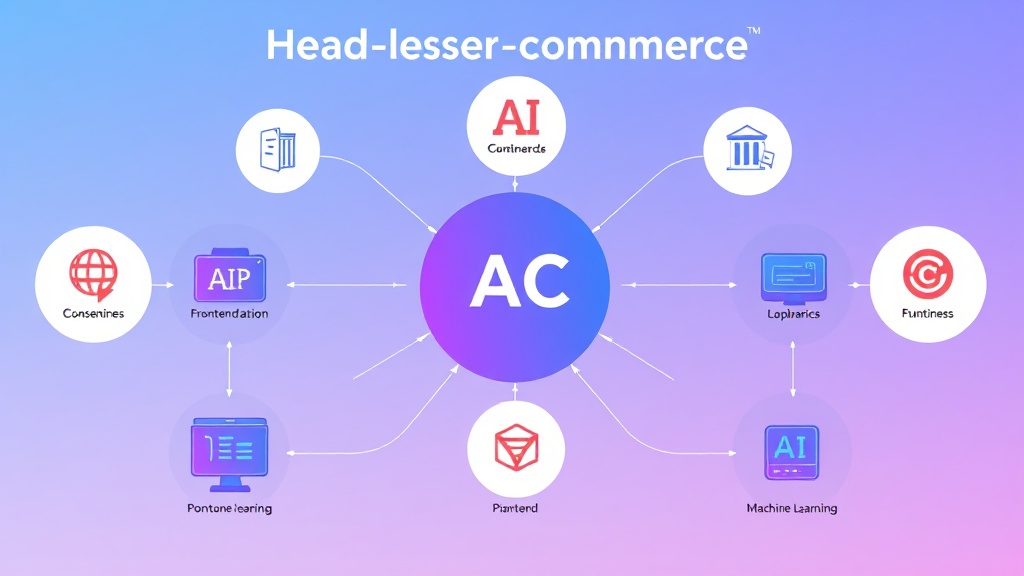
Headless commerce architecture separates the frontend presentation layer from the backend commerce functionality, enabling you to deliver content and shopping experiences across multiple touchpoints while maintaining a single source of truth for business logic and data.
Core Architecture Components
| Component | Function | Technologies | AI Integration Points |
|---|---|---|---|
| Frontend Applications | Customer-facing interfaces | React, Vue.js, Next.js, Flutter | Personalized content rendering, dynamic pricing display |
| API Gateway | Request routing and authentication | AWS API Gateway, Kong, Zuul | Request prioritization, A/B testing routing |
| Commerce Engine | Business logic and transactions | Shopify Plus, commercetools, Elastic Path | Recommendation engine integration, dynamic bundling |
| Content Management | Marketing and product content | Contentful, Strapi, Sanity | Automated content optimization, personalized messaging |
| AI/ML Services | Personalization algorithms | TensorFlow, PyTorch, AWS SageMaker | Customer segmentation, predictive analytics |
| Data Layer | Customer and product data storage | PostgreSQL, MongoDB, Redis | Real-time feature engineering, model training data |
AI Personalization Strategy Framework
Effective AI personalization in headless commerce requires a multi-layered approach that addresses different aspects of the customer journey:
1. Real-Time Personalization
- Dynamic Product Recommendations: Machine learning models that analyze browsing behavior, purchase history, and similar customer patterns to suggest relevant products
- Personalized Search Results: AI-powered search that learns from individual user preferences and adjusts result rankings accordingly
- Adaptive User Interface: Dynamic layout adjustments based on user behavior patterns and device preferences
2. Predictive Analytics
- Churn Prevention: Models that identify customers at risk of churning and trigger personalized retention campaigns
- Lifetime Value Optimization: Algorithms that predict customer lifetime value and adjust marketing spend accordingly
- Inventory Demand Forecasting: AI systems that predict product demand based on historical data, seasonality, and market trends
3. Automated Marketing Optimization
- Email Personalization: Integration with platforms like ActiveCampaign or GetResponse for AI-driven email content and timing optimization
- Dynamic Pricing: Real-time price optimization based on demand, competition, and customer segments
- Content Generation: AI-powered product descriptions and marketing copy using tools like Copy.ai
Detailed Implementation Steps
Phase 1: Infrastructure Setup and Data Pipeline
The foundation of your headless commerce platform begins with establishing robust data infrastructure that can support both current operations and future AI initiatives.
Step 1: Set Up Your Commerce Backend
Choose a headless commerce platform that provides comprehensive APIs and supports your scaling requirements. Popular options include:
- Shopify Plus: $2,000+/month, excellent for businesses migrating from traditional Shopify
- commercetools: Custom pricing, highly flexible for enterprise implementations
- Elastic Path: Starting at $50,000/year, best for complex B2B scenarios
// Example API configuration for Shopify Plus
const shopifyConfig = {
  domain: 'your-shop.myshopify.com',
  storefrontAccessToken: 'your-storefront-token',
  apiVersion: '2023-10'
};

// GraphQL query for product recommendations
const PRODUCT_RECOMMENDATIONS = `
  query productRecommendations($productId: ID!, $intent: ProductRecommendationIntent!) {
    productRecommendations(productId: $productId, intent: $intent) {
      id
      title
      handle
      images(first: 1) {
        edges {
          node {
            url
            altText
          }
        }
      }
      priceRange {
        minVariantPrice {
          amount
          currencyCode
        }
      }
    }
  }
`;
Step 2: Implement Customer Data Platform (CDP)
Establish a centralized customer data platform that aggregates information from all touchpoints:
// Customer data schema example
const customerSchema = {
  customerId: String,
  demographics: {
    age: Number,
    location: String,
    devicePreferences: [String]
  },
  behaviorData: {
    pageViews: [{
      url: String,
      timestamp: Date,
      timeSpent: Number
    }],
    purchases: [{
      orderId: String,
      products: [Object],
      totalValue: Number,
      timestamp: Date
    }],
    searchQueries: [{
      query: String,
      results: [String],
      clickedResults: [String],
      timestamp: Date
    }]
  },
  preferences: {
    categories: [String],
    brands: [String],
    priceRange: {
      min: Number,
      max: Number
    }
  },
  aiSegments: [String],
  lifetimeValue: Number,
  churnProbability: Number
};
Phase 2: Frontend Development with Personalization Hooks
Build your frontend applications with personalization capabilities built into the core architecture rather than added as an afterthought.
Step 3: Create Personalization Components
// React component for personalized product recommendations
import React, { useEffect, useState } from 'react';
import { usePersonalization } from '../hooks/usePersonalization';

const PersonalizedRecommendations = ({ customerId, context }) => {
  const [recommendations, setRecommendations] = useState([]);
  const { getRecommendations, trackInteraction } = usePersonalization();

  useEffect(() => {
    const fetchRecommendations = async () => {
      try {
        const recs = await getRecommendations({
          customerId,
          context,
          algorithm: 'collaborative_filtering',
          fallback: 'trending_products'
        });
        setRecommendations(recs);
      } catch (error) {
        console.error('Failed to fetch recommendations:', error);
        // Implement fallback logic
      }
    };

    fetchRecommendations();
  }, [customerId, context]);

  const handleProductClick = (productId, position) => {
    trackInteraction({
      type: 'recommendation_click',
      productId,
      position,
      context,
      timestamp: new Date().toISOString()
    });
  };

  return (

      Recommended for You

        {recommendations.map((product, index) => (
           handleProductClick(product.id, index)}
            personalizationScore={product.score}
          />
        ))}


  );
};
Phase 3: AI Model Development and Integration
Develop and deploy machine learning models that power your personalization features.
Step 4: Build Recommendation Engine
Expert Tip: Start with collaborative filtering for immediate results, then layer in content-based filtering and deep learning models as your data volume increases. Most successful implementations see 15-25% improvement in conversion rates within the first three months.
# Python example for collaborative filtering model
import pandas as pd
from sklearn.metrics.pairwise import cosine_similarity
from scipy.sparse import csr_matrix

class CollaborativeFilteringRecommender:
    def __init__(self):
        self.user_item_matrix = None
        self.similarity_matrix = None

    def fit(self, interactions_df):
        # Create user-item interaction matrix
        self.user_item_matrix = interactions_df.pivot_table(
            index='customer_id',
            columns='product_id',
            values='rating',
            fill_value=0
        )

        # Calculate user similarity matrix
        sparse_matrix = csr_matrix(self.user_item_matrix.values)
        self.similarity_matrix = cosine_similarity(sparse_matrix)

    def recommend(self, customer_id, n_recommendations=10):
        if customer_id not in self.user_item_matrix.index:
            return self._get_popular_items(n_recommendations)

        user_idx = self.user_item_matrix.index.get_loc(customer_id)
        user_similarities = self.similarity_matrix[user_idx]

        # Find similar users
        similar_users = user_similarities.argsort()[-50:][::-1]

        # Generate recommendations based on similar users' preferences
        recommendations = self._calculate_recommendations(
            user_idx, similar_users, n_recommendations
        )

        return recommendations

    def _calculate_recommendations(self, user_idx, similar_users, n_recs):
        user_ratings = self.user_item_matrix.iloc[user_idx]
        recommendations = {}

        for similar_user_idx in similar_users:
            if similar_user_idx == user_idx:
                continue

            similar_user_ratings = self.user_item_matrix.iloc[similar_user_idx]
            similarity_score = self.similarity_matrix[user_idx][similar_user_idx]

            for product_id, rating in similar_user_ratings.items():
                if user_ratings[product_id] == 0 and rating > 0:
                    if product_id not in recommendations:
                        recommendations[product_id] = 0
                    recommendations[product_id] += similarity_score * rating

        # Sort and return top recommendations
        sorted_recs = sorted(recommendations.items(), key=lambda x: x[1], reverse=True)
        return [product_id for product_id, score in sorted_recs[:n_recs]]
Step 5: Implement Real-Time Personalization API
// Node.js API endpoint for real-time personalization
const express = require('express');
const redis = require('redis');
const { MLModel } = require('./models/personalization');

const app = express();
const redisClient = redis.createClient();
const mlModel = new MLModel();

app.post('/api/personalize', async (req, res) => {
  try {
    const { customerId, context, requestType } = req.body;

    // Check cache first
    const cacheKey = `personalization:${customerId}:${requestType}`;
    const cachedResult = await redisClient.get(cacheKey);

    if (cachedResult) {
      return res.json(JSON.parse(cachedResult));
    }

    // Fetch customer profile
    const customerProfile = await getCustomerProfile(customerId);

    // Generate personalized content
    let result;
    switch (requestType) {
      case 'product_recommendations':
        result = await mlModel.getProductRecommendations(
          customerProfile,
          context
        );
        break;
      case 'search_results':
        result = await mlModel.personalizeSearchResults(
          customerProfile,
          context.query
        );
        break;
      case 'content_optimization':
        result = await mlModel.optimizeContent(
          customerProfile,
          context.pageType
        );
        break;
      default:
        throw new Error('Invalid request type');
    }

    // Cache result for 15 minutes
    await redisClient.setex(cacheKey, 900, JSON.stringify(result));

    res.json(result);
  } catch (error) {
    console.error('Personalization error:', error);
    res.status(500).json({ error: 'Personalization service unavailable' });
  }
});
Advanced Configuration and Optimization
Performance Optimization Strategies
Headless commerce with AI personalization can introduce latency if not properly optimized. Implement these strategies to maintain sub-200ms response times:
- Edge Computing: Deploy personalization models at CDN edge locations using AWS Lambda@Edge or Cloudflare Workers
- Predictive Caching: Pre-compute personalized content for high-probability user journeys
- Progressive Enhancement: Load basic content first, then enhance with personalized elements
- Model Optimization: Use quantized models and feature selection to reduce computational overhead
A/B Testing Integration
Implement systematic testing to optimize your personalization algorithms:
// A/B testing framework for personalization
class PersonalizationTester {
  constructor(experimentConfig) {
    this.experiments = experimentConfig;
    this.analytics = new AnalyticsTracker();
  }

  async getPersonalizedContent(customerId, context) {
    const experiment = this.getActiveExperiment(context.pageType);

    if (!experiment) {
      return this.getDefaultPersonalization(customerId, context);
    }

    const variant = this.assignVariant(customerId, experiment);

    // Track experiment exposure
    this.analytics.track('experiment_exposure', {
      customerId,
      experimentId: experiment.id,
      variant: variant.name,
      timestamp: new Date().toISOString()
    });

    return this.getPersonalizationByVariant(customerId, context, variant);
  }

  assignVariant(customerId, experiment) {
    const hash = this.hashCustomerId(customerId + experiment.id);
    const bucket = hash % 100;

    let cumulativeWeight = 0;
    for (const variant of experiment.variants) {
      cumulativeWeight += variant.weight;
      if (bucket < cumulativeWeight) {
        return variant;
      }
    }

    return experiment.variants[experiment.variants.length - 1];
  }
}
Troubleshooting Common Issues
Data Quality and Model Performance
Problem: Recommendation accuracy decreases over time or new users receive poor recommendations.
Solutions:
- Implement data validation pipelines to ensure consistent data quality
- Use hybrid recommendation approaches that combine collaborative and content-based filtering
- Implement cold-start strategies for new users using demographic and behavioral signals
- Regularly retrain models with fresh data and validate performance metrics
API Performance and Scalability
Problem: Personalization APIs become bottlenecks during high-traffic periods.
Solutions:
- Implement circuit breakers to prevent cascade failures
- Use async processing for non-critical personalization features
- Scale horizontally with container orchestration
- Implement graceful degradation with fallback content
// Circuit breaker implementation
class CircuitBreaker {
  constructor(threshold = 5, timeout = 60000) {
    this.failureThreshold = threshold;
    this.timeout = timeout;
    this.failureCount = 0;
    this.lastFailureTime = null;
    this.state = 'CLOSED'; // CLOSED, OPEN, HALF_OPEN
  }

  async execute(operation) {
    if (this.state === 'OPEN') {
      if (Date.now() - this.lastFailureTime > this.timeout) {
        this.state = 'HALF_OPEN';
      } else {
        throw new Error('Circuit breaker is OPEN');
      }
    }

    try {
      const result = await operation();
      this.onSuccess();
      return result;
    } catch (error) {
      this.onFailure();
      throw error;
    }
  }

  onSuccess() {
    this.failureCount = 0;
    this.state = 'CLOSED';
  }

  onFailure() {
    this.failureCount++;
    this.lastFailureTime = Date.now();

    if (this.failureCount >= this.failureThreshold) {
      this.state = 'OPEN';
    }
  }
}
Data Privacy and Compliance
Problem: Balancing personalization effectiveness with privacy regulations like GDPR and CCPA.
Solutions:
- Implement consent management systems that allow granular control over data usage
- Use privacy-preserving techniques like differential privacy and federated learning
- Provide clear data portability and deletion mechanisms
- Regular compliance audits and documentation of data processing activities
Measuring Success and KPIs
Establish comprehensive metrics to track the effectiveness of your headless commerce AI personalization implementation:
| Metric Category | Key Indicators | Target Benchmarks | Measurement Tools |
|---|---|---|---|
| Conversion Optimization | Conversion rate, AOV, cart abandonment | 15-25% improvement in conversion rates | Google Analytics, custom dashboards |
| Engagement Metrics | Click-through rates, time on site, page views per session | 20-30% increase in engagement | Amplitude, Heap analytics |
| Personalization Effectiveness | Recommendation accuracy, diversity, novelty | 85%+ accuracy for returning users | Custom ML model evaluation |
| Technical Performance | API response times, uptime, error rates | Sub-200ms response times, 99.9% uptime | Application monitoring tools |
| Business Impact | Revenue per visitor, customer lifetime value | 10-20% increase in CLV | Business intelligence platforms |
Next Steps and Advanced Strategies
Scaling Your Implementation
Once your basic headless commerce AI personalization system is operational, consider these advanced strategies:
- Multi-Armed Bandit Algorithms: Implement dynamic content optimization that automatically adjusts based on performance
- Deep Learning Integration: Deploy neural networks for complex pattern recognition in customer behavior
- Cross-Channel Personalization: Extend personalization to email marketing, social media, and offline touchpoints
- Voice and Visual Search: Integrate AI-powered search capabilities for emerging interaction modes
Integration with Marketing Automation
Connect your personalization engine with marketing automation platforms to create cohesive customer experiences. Tools like ConvertKit and Later can leverage your AI insights for targeted campaigns across email and social media channels.
Continuous Improvement Framework
Establish processes for ongoing optimization:
- Weekly Performance Reviews: Analyze key metrics and identify improvement opportunities
- Monthly Model Retraining: Update AI models with fresh data and validate performance
- Quarterly Strategy Assessment: Evaluate personalization strategies against business objectives
- Annual Technology Audits: Review architecture and consider new technologies or platforms
Industry Insight: Companies that implement comprehensive headless commerce with AI personalization typically see 20-40% increases in conversion rates and 25-35% improvements in customer lifetime value within the first year of implementation.
Essential Resources and Tools
Development Frameworks and Libraries
- Frontend: Next.js Commerce, Gatsby, Nuxt.js for e-commerce-optimized development
- AI/ML: TensorFlow.js for client-side personalization, scikit-learn for rapid prototyping
- APIs: GraphQL for efficient data fetching, REST APIs for broader compatibility
- Testing: Jest, Cypress for automated testing, Optimizely for A/B testing
Monitoring and Analytics
Implement comprehensive monitoring using tools like ContentKing for technical SEO monitoring and performance tracking. This ensures your headless implementation maintains search engine visibility while delivering personalized experiences.
FAQ Section
What’s the typical timeline for implementing headless commerce with AI personalization?
A complete implementation typically takes 6-12 months, depending on complexity and existing infrastructure. The basic headless commerce setup can be completed in 2-3 months, while AI personalization features require an additional 3-6 months for data collection, model training, and optimization. Plan for at least 3 months of data collection before meaningful personalization becomes effective.
How much does headless commerce with AI personalization cost?
Initial implementation costs range from $100,000 to $500,000 for mid-market businesses, with enterprise implementations often exceeding $1 million. Ongoing costs include platform fees ($2,000-$10,000/month), cloud infrastructure ($1,000-$5,000/month), and development resources. However, most businesses see ROI within 12-18 months through improved conversion rates and customer lifetime value.
What are the main technical challenges in headless commerce AI implementation?
The primary challenges include managing API complexity across multiple services, ensuring consistent performance under varying loads, handling real-time personalization at scale, and maintaining data quality for AI models. Additionally, coordinating updates across decoupled systems and implementing proper monitoring and debugging tools requires careful planning and experienced development teams.
How do you ensure AI personalization doesn’t create filter bubbles or bias?
Implement diversity algorithms that intentionally introduce variety in recommendations, regularly audit model outputs for demographic bias, use fairness-aware machine learning techniques, and provide user controls for personalization preferences. Additionally, maintain transparency about how personalization works and allow users to see and modify their data profiles. Regular bias testing and diverse training data are essential for ethical AI implementation.
Ready to transform your e-commerce platform with cutting-edge headless commerce and AI personalization? Our team of experts at futia.io’s automation services specializes in designing and implementing scalable, AI-powered commerce solutions that drive measurable business results. Contact us today to discuss your specific requirements and develop a customized roadmap for your headless commerce transformation.
🛠️ Tools Mentioned in This Article